

April 8, 2026
The Real ROI of Automation Is Predictability
Automation in manufacturing is often justified by labor savings, faster cycle times, or increased throughput. These benefits are real and measurable, but they are not the only valuable outcome. The additional return on investment from automation is predictability – the ability to produce consistent results, maintain reliable schedules, and scale operations with confidence. Predictability reduces risk across the entire operation, from production and planning to quality and customer relationships. Automation does not simply make production faster; it makes performance repeatable.
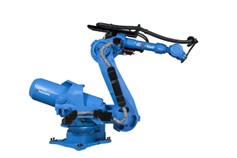
From Speed to Stability
Many automation projects begin with efficiency goals such as reducing manual handling or increasing output. Over time, however, the true value of automation becomes clear when variability begins to disappear. Manual processes are inherently inconsistent. Even skilled operators introduce small variations in timing, positioning, or handling that can accumulate into larger problems such as dimensional inconsistencies, cosmetic defects, equipment wear, scrap, or unplanned downtime.
Automation reduces these variations by executing the same motion and sequence every cycle. That consistency creates stability, and stability enables predictable production. In high-volume environments, this shift from speed to stability is often where the long-term return on automation is realized.
Predictability Drives Planning Confidence
Production planning depends on reliable assumptions. When cycle times fluctuate or downtime is unpredictable, schedules become difficult to maintain. Automation stabilizes the process, allowing manufacturers to plan with greater confidence.
Predictable operations lead to more accurate production schedules, improved delivery reliability, and better control of inventory and overtime. Instead of reacting to disruptions, organizations can operate proactively. This shift improves coordination across departments and strengthens customer relationships. Predictability turns manufacturing from a reactive function into a controlled, managed system.
Quality Improves When Variability Declines
Quality issues rarely result from a single major failure. More often, they stem from small variations that accumulate over time. Automation helps eliminate these variations by ensuring consistent part handling, repeatable positioning, and controlled timing.
This consistency reduces the risk of part damage, contamination, dimensional drift, and cosmetic defects. In industries such as medical, packaging, and consumer products, where traceability and reliability are essential, predictable automation plays a critical role in maintaining product quality.
Integration Matters More Than Equipment
Automation delivers its greatest value when systems are integrated rather than operating independently. A robot, conveyor, or auxiliary device working alone may improve efficiency, but a connected system improves predictability.
Modern automation platforms are designed to communicate directly with machines and auxiliary equipment, allowing processes to respond automatically to changing conditions. When systems communicate and operate together, variability decreases and reliability increases. This system-level integration is what transforms automation from a productivity tool into a stability tool.
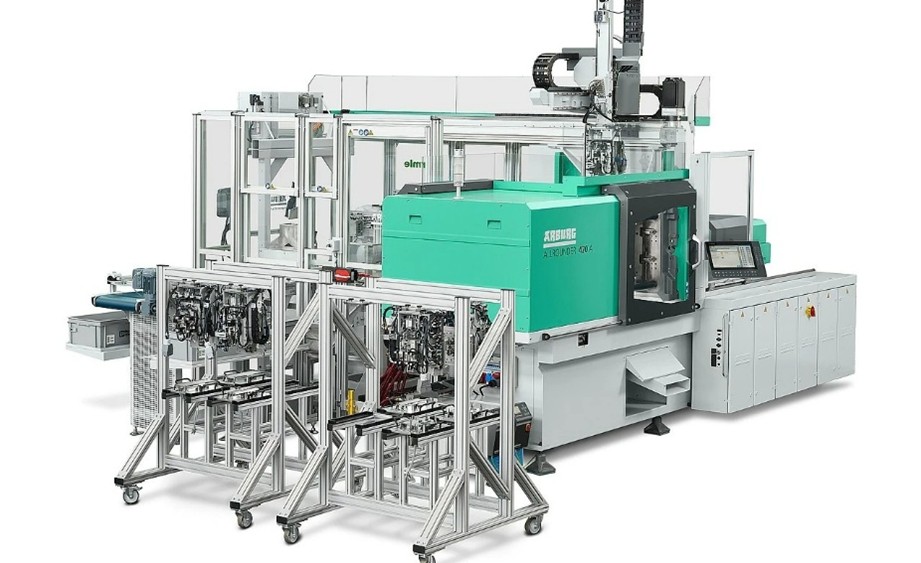
Turnkey Systems: Designing Predictability from the Start
One of the most effective ways to achieve predictable production is through fully integrated turnkey manufacturing solutions. Instead of assembling equipment piece by piece, turnkey systems are engineered, configured, and validated as a complete process.
By combining machine technology, automation, tooling integration, and process validation into a single engineered solution, manufacturers reduce startup variability, integration risk, and commissioning time. They also eliminate responsibility gaps between suppliers. The result is a production system designed for repeatability from day one.
Predictability Enables Sustainable Growth
Growth in manufacturing is not just about adding capacity – it is about maintaining control as production scales. As volumes increase, small variations can quickly become significant problems. Without predictable processes, expansion can introduce instability.
Automation allows manufacturers to scale production while maintaining consistent performance across shifts, products, and facilities. It supports faster program launches, standardized operations, and confident expansion into new markets. Predictability is what makes growth sustainable.
Automation is not just about efficiency. It is about control
If your automation strategy is focused only on speed or labor reduction, it may be time to look at the bigger picture. The most valuable automation investments are the ones that deliver predictable performance and turnkey solutions can help ensure that predictability is built into the system from the start.
How predictable is your production?
The manufacturers that succeed in the years ahead will not simply be the fastest – they will also be the most predictable.
Contact us to review how automation solutions can improve your stability and ROI.
Solution by Sepro: automation solutions – Sepro Group | Sepro Group
Engineered Conveyor Systems | Custom Conveying Solutions
Turnkey solutions for different areas of application | ARBURG