

Cooling Might Be the Most Important Process Variable You’re Not Monitoring
In plastics processing, water is critical – yet it is often treated as an afterthought. Attention typically focuses on machines, molds, automation, and materials because they are visible investments that drive capital decisions. However, behind nearly every performance challenge in injection molding, extrusion, or blow molding, there is a quieter variable influencing cycle time, quality, and stability: water – and more importantly, how well it is managed.
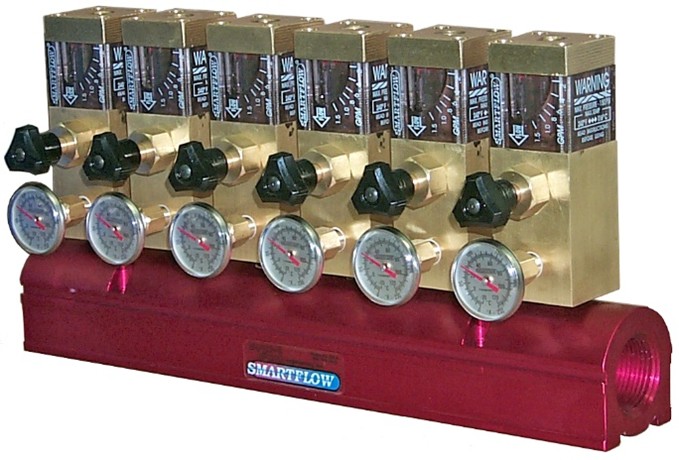
Water Is the Hidden Process Variable
Water in plastics processing is not just a utility; it is a process input. Every molded or extruded part depends on controlled heat transfer. When cooling is inconsistent, the entire process becomes unstable. Common symptoms of poor water management include longer cycle times, dimensional variation, warpage, surface defects, excess scrap, and unstable startup conditions.
Processors often attempt to correct these issues by adjusting machine parameters or modifying tooling. In many cases, however, the root cause lies within the cooling system rather than the machine itself. The challenge is rarely the availability of water – it is the control of water that determines performance.
Cooling Is Where Profitability Lives
Cooling typically represents 60–80% of total cycle time in injection molding and plays a similarly dominant role in extrusion and blow molding stability. This means small improvements in cooling performance can produce significant productivity gains.
Even a modest reduction in cycle time can dramatically increase output, improve dimensional consistency, and reduce scrap without requiring new capital investment. In many operations, the fastest way to increase capacity is not to add equipment, but to improve cooling efficiency.
Flow — Not Temperature — Defines Performance
One of the most common misconceptions in plastics processing is that temperature alone determines cooling performance. In reality, flow is the critical variable.
Effective cooling depends on factors such as flow rate, pressure differential, turbulence, temperature stability, and circuit balance. Without adequate flow, heat cannot be removed efficiently, regardless of temperature settings. Two molds running at the same temperature can produce very different results if their cooling circuits are not balanced or properly maintained.
Cooling Is a System — Not a Device
Cooling performance depends on the entire system working together, including pumps, piping, filtration, temperature controllers, manifolds, hoses, and mold cooling channels. A restriction anywhere in this chain reduces performance across the process.
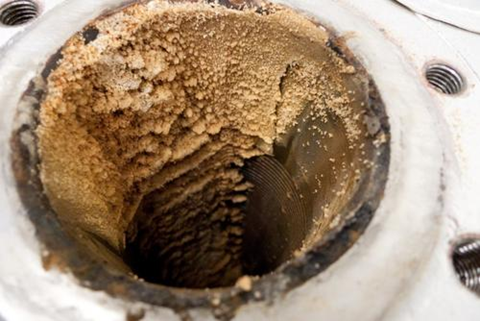
Many cooling problems develop gradually through scale buildup, blocked lines, air pockets, or imbalanced circuits. These issues rarely cause immediate failure but slowly reduce efficiency and stability. Increasingly, manufacturers are adopting flow monitoring and circuit validation tools to improve visibility into cooling performance and maintain consistent operation.
Water Quality Is the Silent Driver of Performance
Water quality plays a critical role in maintaining heat transfer efficiency. Scale, corrosion, and biological growth can slowly restrict cooling channels and reduce system performance. Even minor buildup inside cooling circuits acts as insulation, increasing cycle time and energy consumption.
Routine monitoring of water quality – including filtration, conductivity, pH balance, hardness, and biological control – helps protect tooling and maintain stable production. Clean water is not just about equipment protection; it is essential for consistent process performance.
Water Management Is Risk Management
In high-volume manufacturing, stability is often more valuable than peak speed. Poor cooling introduces variability, which leads to scrap, downtime, and delivery risk. Strong water management practices – such as verifying flow, maintaining filtration, documenting cooling performance, and auditing systems regularly – reduce that risk and support predictable production
The Takeaway
Machines, molds, automation, and materials are important, but none can compensate for inconsistent heat removal. The most reliable operations recognize that water is not simply a utility – it is a controlled process variable.
Manufacturers that measure, maintain, and manage water intentionally achieve faster cycles, better quality, and more predictable production.
Water is not just a utility. Water is a process.
If you’d like to evaluate your current cooling system performance or identify opportunities to improve stability and cycle time, the Turner Group is ready to help.