

Lightweighting with Integrity
Reducing Mass in Injection & Blow Molding Without Compromising Performance
Lightweighting is no longer just a sustainability initiative – it’s a competitive manufacturing strategy. In both injection molding and blow molding, reducing part weight lowers material consumption, shortens cycle times, improves shipping efficiency, and reduces overall carbon footprint.
But true lightweighting is not only about “using less plastic.” It is about engineering smarter parts that maintain structural integrity, dimensional stability, and long-term performance.
Lightweighting in Injection Molding
Injection molding offers multiple pathways to reduce mass while maintaining strength:
1. Thin-Wall Design Optimization
Advancements in machine performance and mold technology allow for consistent filling of thinner wall sections. The key is maintaining uniform wall thickness to prevent warpage, sink, and internal stress. Lightweighting succeeds when part geometry supports balanced flow and controlled packing.
2. Ribbing & Structural Geometry
Rather than relying on thick walls for strength, well-designed ribs, gussets, and coring provide stiffness with significantly less material. Proper rib-to-wall ratios and gate placement ensure strength without cosmetic or dimensional compromise.
3. Material Engineering
High-performance polymers, mineral-filled resins, and long-fiber reinforced materials allow for reduced wall thickness while maintaining mechanical properties. Material selection becomes a strategic decision tied to performance requirements – not simply cost per pound.
4. Advanced Processing Technologies
Technologies such as gas-assist molding, structural foam molding, and microcellular foaming reduce density while preserving strength. These approaches are particularly valuable in larger parts where weight savings compound across production volumes.
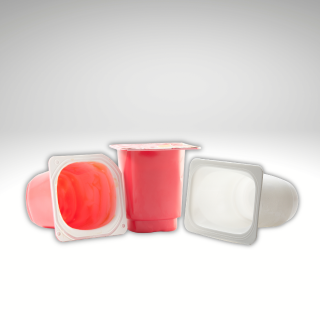
In packaging specifically, ARBURG machines and processes facilitate thin-walled IML packaging, fast cycle production of lightweight containers, and foamed parts such as reusable thermal cups with excellent insulation and reduced material usage – showing how injection molding innovations contribute to lighter packaging solutions with maintained performance.
Lightweighting in Blow Molding
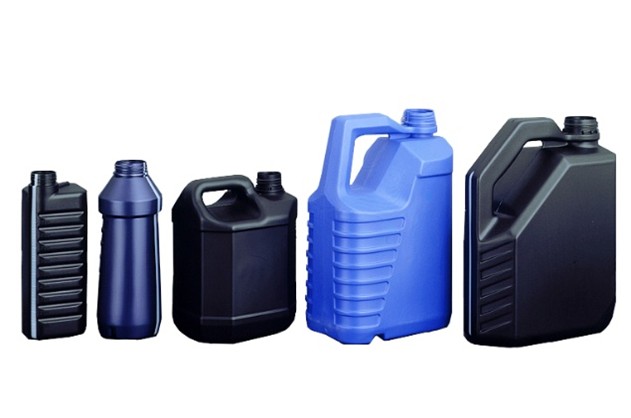
Blow molding – particularly in packaging – has been a leader in lightweight innovation.
1. Parison & Preform Control
Precise control of parison programming or preform design enables optimized wall distribution. Material is placed only where structural strength is required, such as base corners, handles, and load-bearing panels.
- Uniloy’s Thickness Comparison System (TCS) is an inline quality monitoring solution designed to measure and compare wall thickness distribution in blow molded parts. Using non-contact sensing technology, TCS evaluates critical areas of the container and compares them to established reference profiles.
- This allows processors to detect subtle wall shifts before they result in performance failures such as reduced top-load strength, paneling, or drop test issues. By providing real-time feedback, TCS supports closed-loop process control, tighter material distribution, and confident lightweighting – ensuring resin is removed strategically while maintaining structural integrity and repeatable performance.
2. Top-Load & Drop Performance Engineering
Lightweight bottles must pass compression, drop, and transportation testing. Finite element analysis and real-world validation ensure thinner walls still meet stacking and impact requirements.
3. Resin Optimization
Improved HDPE and PET grades with enhanced stiffness-to-weight ratios allow manufacturers to reduce gram weight while maintaining clarity, barrier performance, and durability.
4. Sustainability Alignment
Less material means reduced resin consumption, lower energy use during processing, and improved recyclability metrics. However, lightweighting must maintain compatibility with recycling streams and avoid over-engineering with complex blends that hinder reprocessing.
The Engineering Balance: Mass vs. Integrity
Lightweighting without analysis can introduce hidden risks:
- Reduced impact resistance
- Increased creep or long-term deformation
- Warpage or dimensional drift
- Seal failure in packaging
- Reduced top-load strength
This is why CAE simulation, mold flow analysis, and real-world process validation are essential. Lightweighting is a systems decision – integrating part design, mold design, material behavior, and processing conditions. Capabilities – Kruse Analysis
Where Lightweighting Creates the Greatest Value
For OEMs and processors, intelligent lightweighting delivers measurable benefits:
- Lower raw material spend
- Faster cycle times
- Reduced shipping costs
- Improved sustainability metrics
- Stronger competitive differentiation
The highest return is achieved when lightweighting is approached proactively during design – not reactively after launch.
Designing for the Future
If you’re evaluating lightweight opportunities in injection molding or blow molding, the conversation should start with functional requirements, not wall thickness. Smart design, validated processing, and disciplined engineering ensure lighter parts deliver the same – or better – real-world performance.