
From Gravity-Assisted Loading to Automation-Ready Cells:
Vertical Molding Sets the Standard for Insert Molding
Insert molding continues to expand across electronics, medical devices, automotive connectors, and consumer products. Whether over molding sensors, encapsulating delicate components, or embedding metal hardware, the process demands precision, stability, and repeatability. Vertical clamp injection molding machines deliver these qualities by design, making them the preferred platform for insert molding applications.
Why Vertical Clamp Machines Excel
Insert molding blends careful component handling with high-precision molding, and vertical machines offer several natural advantages.
Gravity-Assisted Insert Placement
With the fixed mold half located at the bottom, operators or robots can place inserts directly into the cavity, and gravity helps secure them. This minimizes the need for complex retention features, reduces misalignment, and improves consistency with multi-insert or delicate components. Tall or heavy inserts remain stable without additional support, simplifying both manual and automated loading.
Operator-Friendly Ergonomics
Insert molding often involves human interaction – either fully manual loading or a hybrid automated process. Vertical presses provide a comfortable working height, clear visibility into the mold area, and a natural workflow for verifying insert placement. Safer, more ergonomic access translates into fewer errors, higher throughput, and greater operator satisfaction.
Shuttle and Rotary Table Efficiency
Vertical machines are uniquely compatible with shuttle and rotary tables, which enable true parallel processing. A shuttle table allows one side to be loaded while the other molds, while rotary tables can support continuous three-station workflows: loading, molding, and demolding. This significantly reduces idle time, improves cycle consistency, and increases output – making the configuration ideal for high-volume or labor-sensitive insert molding operations.
Flexible Automation Integration
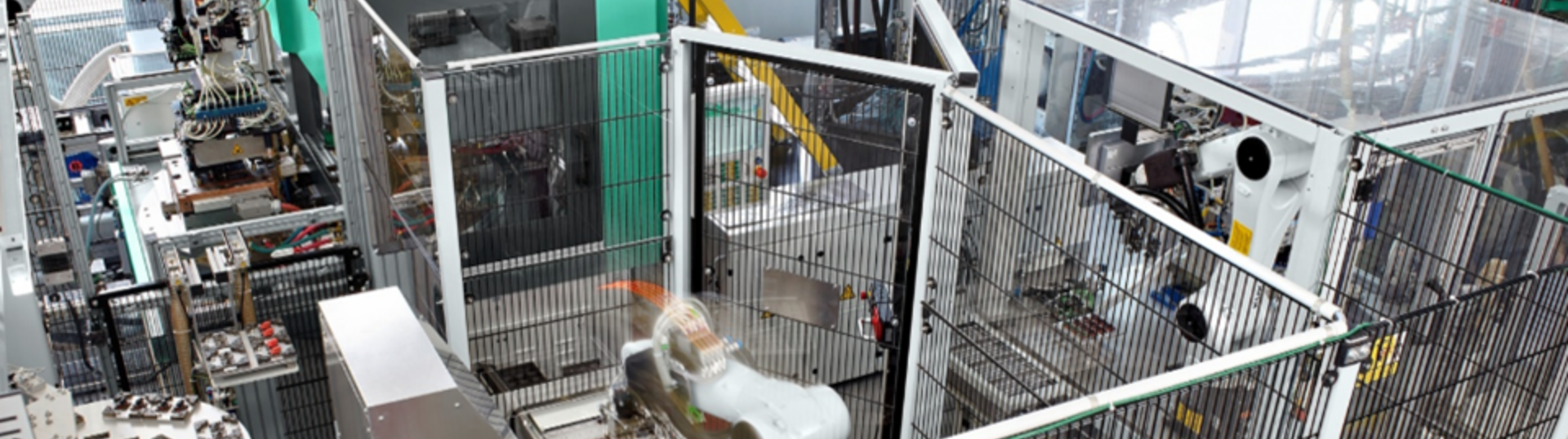
The open mold access typical of vertical presses supports easy integration of six-axis robots, linear robots, and downstream inspection or assembly processes. With three-sided access, automation engineers have more freedom to design cells that incorporate insert verification, part handling, in-mold decoration, post-mold testing, or other value-added operations. The result is a versatile platform for turnkey systems or high-mix production environments.
Perfect for Complex, High-Value Parts
Applications involving lead frames, contact strips, pre-molded sensors, cable ends, or electronics assemblies benefit from the stability and accessibility of vertical mounting. Precision metal components stay seated, vulnerable electronics remain protected, and the open layout ensures accuracy during both handling and molding.
ARBURG: A Proven Vertical Molding Leader
ARBURG has built a strong global reputation for high-performance vertical injection molding machines. Their modular and flexible vertical machine platforms are recognized for exceptional accessibility, compact automation-friendly footprints, precise clamping systems. Across industries, ARBURG’s vertical machines have become trusted solutions for demanding insert molding applications, integrating seamlessly with shuttle tables, rotary tables, and advanced automation. This established pedigree provides the foundation for ARBURG’s latest evolution in vertical molding technology.
Introducing the New ARBURG ALLROUNDER 475 V
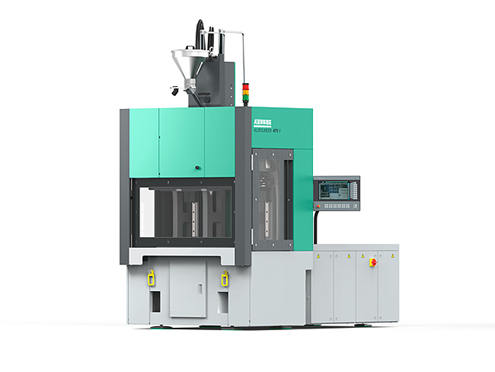
Debuted at K 2025, the ALLROUNDER 475 V represents ARBURG’s next-generation vertical solution for insert molding. Built around a “free-space” concept, it offers open mold access from three sides, an ergonomic working height, and a compact footprint with ample room for automation. Key features include a 1,000 kN (110-ton) clamp, flexible injection units (100–400), energy-efficient servo hydraulics, and the new intuitive Gestica-lite control. The 475 V sets a new benchmark for productivity, efficiency, and automation-ready design in modern insert molding cells.
Further Reading
Vertical Allrounders: Ergonomic Overmoulding of Inserts | ARBURG